North and south /

|


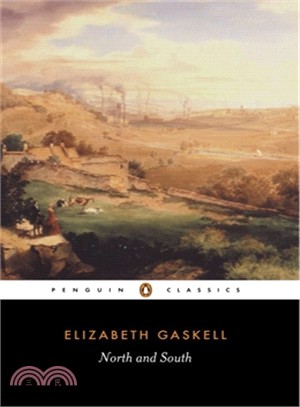
"How am I to dress up in my finery, and go off and away to smart parties, after the sorrow I have seen today?"When her father leaves the Church in a crisis of conscience, Margaret Hale is uprooted from her comfortable home in Hampshire to move with her family to the north of England. Initially repulsed by the ugliness of her new surroundings in the industrial town of Milton, Margaret becomes aware of the poverty and suffering of the local mill workers and develops a passionate sense of social justice. This is intensified by her tempestuous relationship with the mill-owner and self-made man, John Thornton, as their fierce opposition over his treatment of his employees masks a deeper attraction. In North and South, Elizabeth Gaskell skillfully fused individual feeling with social concern, and in Margaret Hale created one of the most original heroines of Victorian literature.In her introduction Patricia Ingham examines geographical, economic and class differences, and male and female roles in North and South. This edition also includes a list for further reading, notes and a glossary.
Elizabeth Cleghorn Gaskell was born in London in 1810, but she spent her formative years in Cheshire, Stratford-upon-Avon and the north of England. In 1832 she married the Reverend William Gaskell, who became well known as the minister of the Unitarian Chapel in Manchester’s Cross Street. As well as leading a busy domestic life as minister’s wife and mother of four daughters, she worked among the poor, traveled frequently and wrote. Mary Barton (1848) was her first success.Two years later she began writing for Dickens’s magazine, Household Words, to which she contributed fiction for the next thirteen years, notably a further industrial novel, North and South (1855). In 1850 she met and secured the friendship of Charlotte Bronte. After Charlotte’s death in March 1855, Patrick Bronte chose his daughter’s friend and fellow-novelist to write The Life of Charlotte Bronte (1857), a probing and sympathetic account, that has attained classic stature. Elizabeth Gaskell’s position as a clergyman’s wife and as a successful writer introduced her to a wide circle of friends, both from the professional world of Manchester and from the larger literary world. Her output was substantial and completely professional. Dickens discovered her resilient strength of character when trying to impose his views on her as editor of Household Words. She proved that she was not to be bullied, even by such a strong-willed man.Her later works, Sylvia’s Lovers (1863), Cousin Phillis (1864) and Wives and Daughters (1866) reveal that she was continuing to develop her writing in new literary directions. Elizabeth Gaskell died suddenly in November 1865.Patricia Ingham is senior research fellow and reader at St. Anne's College, Oxford. She is the general editor of Thomas Hardy's fiction in Penguin Classics and edited Gaskell's North and South for the series.
此功能為會員專屬功能請先登入
此功能為會員專屬功能請先登入
此功能為會員專屬功能請先登入
此功能為會員專屬功能請先登入
|
相近主題 :
|
| |||||||||||||||||||||||||||||||||||||||||||||||||||||||||||||||||||||||
 借閱次數
:
借閱次數
: 
 點閱:0
點閱:0
 評分:0
評分:0
 評論:0
評論:0
 引用:0
引用:0